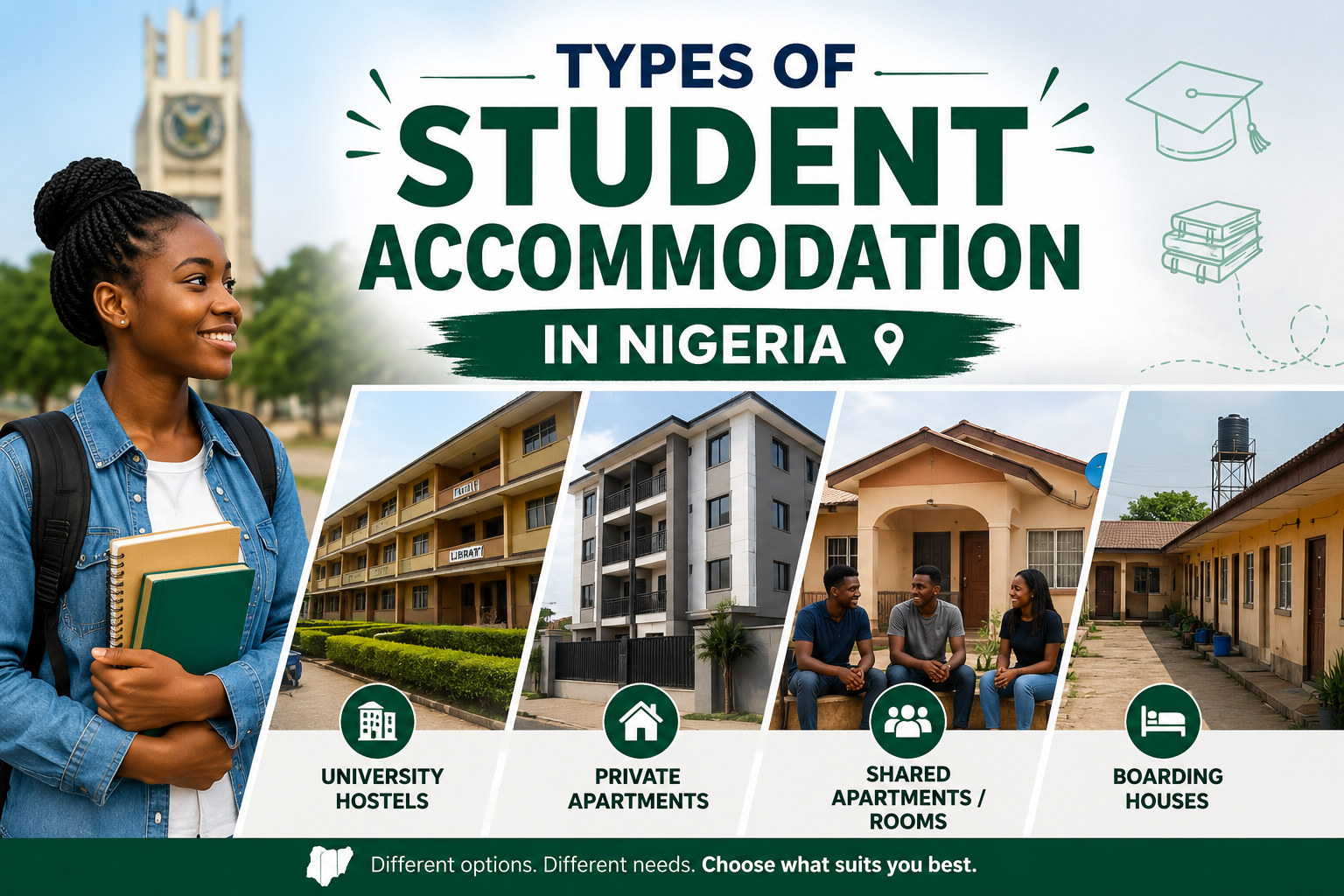
TYPES OF STUDENT ACCOMMODATION IN NIGERIA
Before you start searching, you need to understand your options. Not all student housing is the same.
A. University-Managed Hostels (On-Campus)
These are hostels owned and run directly by the university.
Pros: Most affordable option (typically ₦80,000 – ₦90,000 per session), Close to lecture halls and library, Easier to make friends, generally more secure
Cons:
Very limited spaces (balloting system)
Basic amenities (shared bathrooms, no A/C in many halls)
Strict rules (lights out, visitor restrictions)
Examples: UNILAG’s King Jaja, Mariere, Eni Njoku Halls; UNN’s Okpara Hall
B. Private Hostels (Off-Campus)
These are privately owned hostels built specifically for students.
Pros: Better amenities (A/C, Wi-Fi, sometimes en-suite), More flexible rules, Usually available on demand (no balloting)
Cons: Much more expensive (₦700,000+ per session). May be far from campus, Quality varies widely
Examples: UNILAG’s Gbajabiamila Hall (PPP model), various private hostels in Yaba and Surulere
C. Shared Apartments / Off-Campus Rentals
This is when you rent a room or apartment with other students.
Pros: Most flexible option and can be very affordable if you share (₦250,000 – ₦500,000 per year). Feels more like independent living. Choose your location
Cons: Need to find reliable roommates, Responsible for bills (electricity, water, waste), Landlord issues possible, Daily transport costs add up, D. Homestays (Less Common, but Available), Living with a family near your school.
Pros: Home-cooked meals sometimes included, Built-in guidance and supervision, Usually safe
Cons: Harder to find, Less privacy, May have strict house rules.